
Have you ever found yourself wandering through a city and wondering about the darker chapters of its history? If you’re in Amsterdam, a city with a rich and complex past, you may want to take a step back and reflect on a place that remembers the victims of one of the darkest times in human history. Schaduwzijde, located along the Amstel river, invites you to experience that history first-hand, in a way that will surely stay with you long after you leave.
The Schaduwzijde (Shadow Side) walk is not just a stroll along the river; it’s an opportunity to understand the lives of the Jewish people who once lived here, many of whom were tragically deported during the Second World War. As you walk along the water, you’ll be guided by a collection of plaques that commemorate the Jewish community that once thrived in the area. The walk is a moving reminder of the many families and individuals who were taken from their homes and sent to concentration camps. The peaceful setting of the riverbank only heightens the sense of loss, as you’re left to reflect on the quiet but deeply meaningful history that unfolds before you.
Take Little Bernie With You Wherever You Go
Disover all there is to do in Amsterdam with the one and only family travel guide. 150 pages of games, puzzles, activities and challenges tell fascinating stories about the sights, people, culture and history of this most irrepressible and charming city

Why should you visit Schaduwzijde? This walk is a poignant way to connect with the past and remember those who suffered during the Holocaust. While it might not be a typical tourist activity, it offers a chance to reflect and learn about a significant part of Amsterdam’s history. It’s an ideal visit for those who want to understand the complex layers of the city and the struggles its residents endured.
What makes Schaduwzijde particularly moving is its simplicity—there are no grand monuments or flashy displays, just simple plaques on the waterfront. It’s a solemn yet necessary part of the city’s history, making it a worthwhile stop if you’re interested in learning more about the Jewish community’s experience during the war.

You can expect to spend around 30 minutes here, walking slowly and reflecting. The best time to visit is during the quieter hours of the day when you can walk undisturbed by large crowds. Early mornings or late afternoons tend to offer a more serene experience.
Stay tuned to Little Bernie for updates on this monument and follow our social media channels for last-minute information.
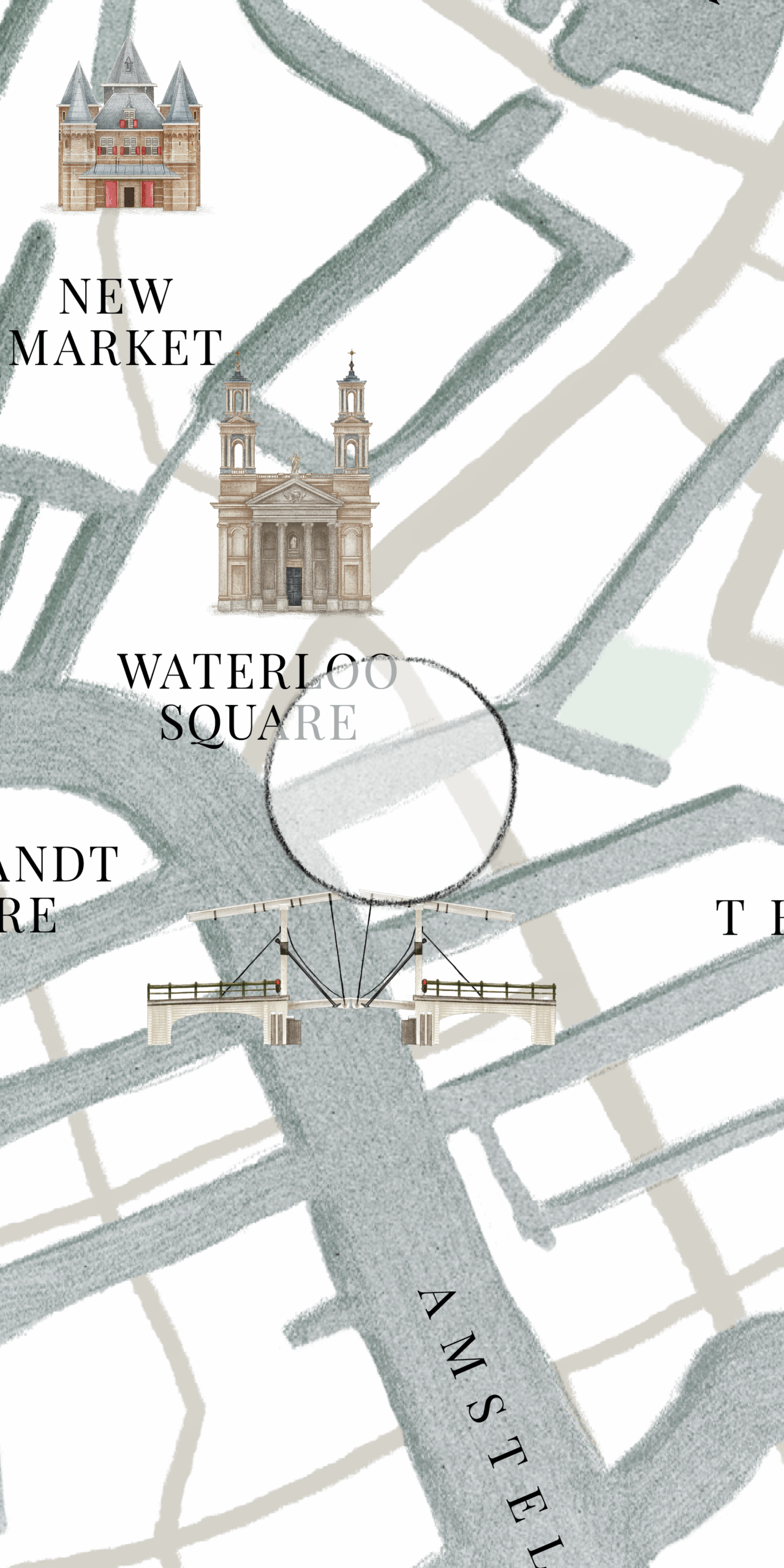
Walk from Waterloo Square passed the Amstel River. Nieuwe Keizersgracht is the second canal on the left. Stay at the side of the Amstelhof building. You’ll find information on silver plaquettes at the waterside.
Plan Your Visit
SCHADUWZIJDE
Nieuwe Keizersgracht 1
1018 DS Amsterdam, Netherlands
About This Area
WATERLOO SQUARE
This area was once known as the Jewish Quarter of Amsterdam and must have been one of the most lively parts of the city. However, after World War II, most of the historic buildings were demolished. In the 1980s, a modern structure called the Stopera was built in the open space by the Amstel river. Today, the neighbourhood is home to the Jewish Museum and several impressive monuments.